
What Is Bonding?
Bonding is the intentional electrical connection of conductive parts, such as metal enclosures, equipment grounding conductors, and metal piping, to keep them at a similar electrical potential. The connection creates a continuous path for fault current to return toward the source, helping protective devices respond when an unintended energized condition occurs.
Quick Facts About Bonding
Category
Electrical safety connection
Used for
Continuous fault-current paths
Applies to
Conductive electrical and building parts
Common confusion
Bonding is not the same as grounding
Also called
Equipotential bonding
Often discussed with
Electrical Grounding Installation, Electrical Safety Inspection
Key Takeaways About Bonding
- Bonding connects conductive parts within an electrical system.
- Continuity helps fault current travel toward the source.
- Bonding and grounding perform related but different functions.
How Bonding Works
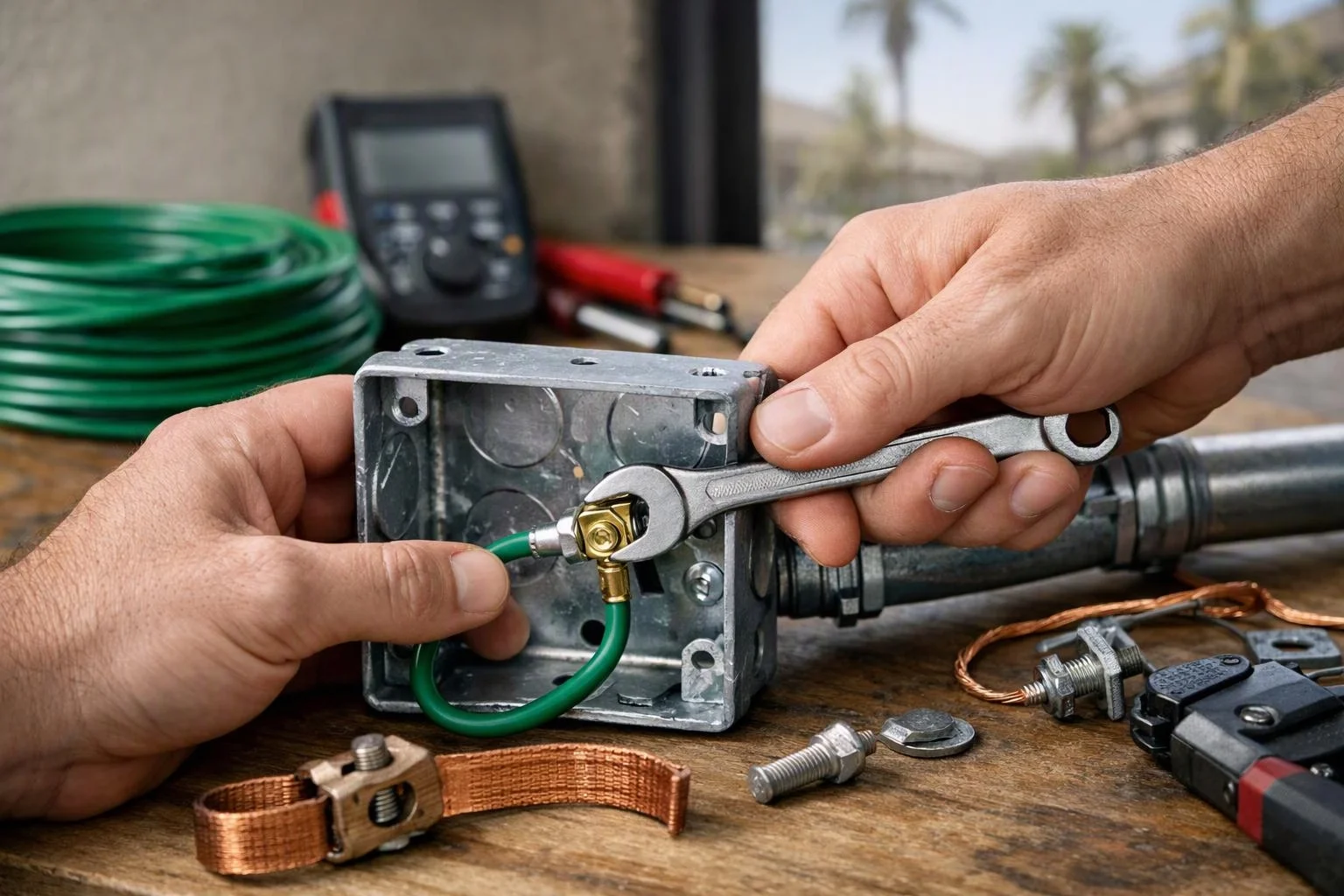
Bonding links conductive parts that could carry electricity during a fault. These parts may include metal equipment cabinets, raceways, service enclosures, and other accessible metal components. The connections create electrical continuity across the system, so current does not stop at an isolated metal section.
Related glossary terms: Ground Fault, Electrical Service, Service Entrance.
An electrician checks bonding by inspecting connection points and testing continuity between related conductive parts. A loose fastener, coating, corrosion, or damaged conductor can interrupt that path. Bonding works with grounding, which connects the electrical system to earth through grounding electrodes and related conductors. The two functions interact, but they describe different paths and purposes.
From the Center Electric Service team
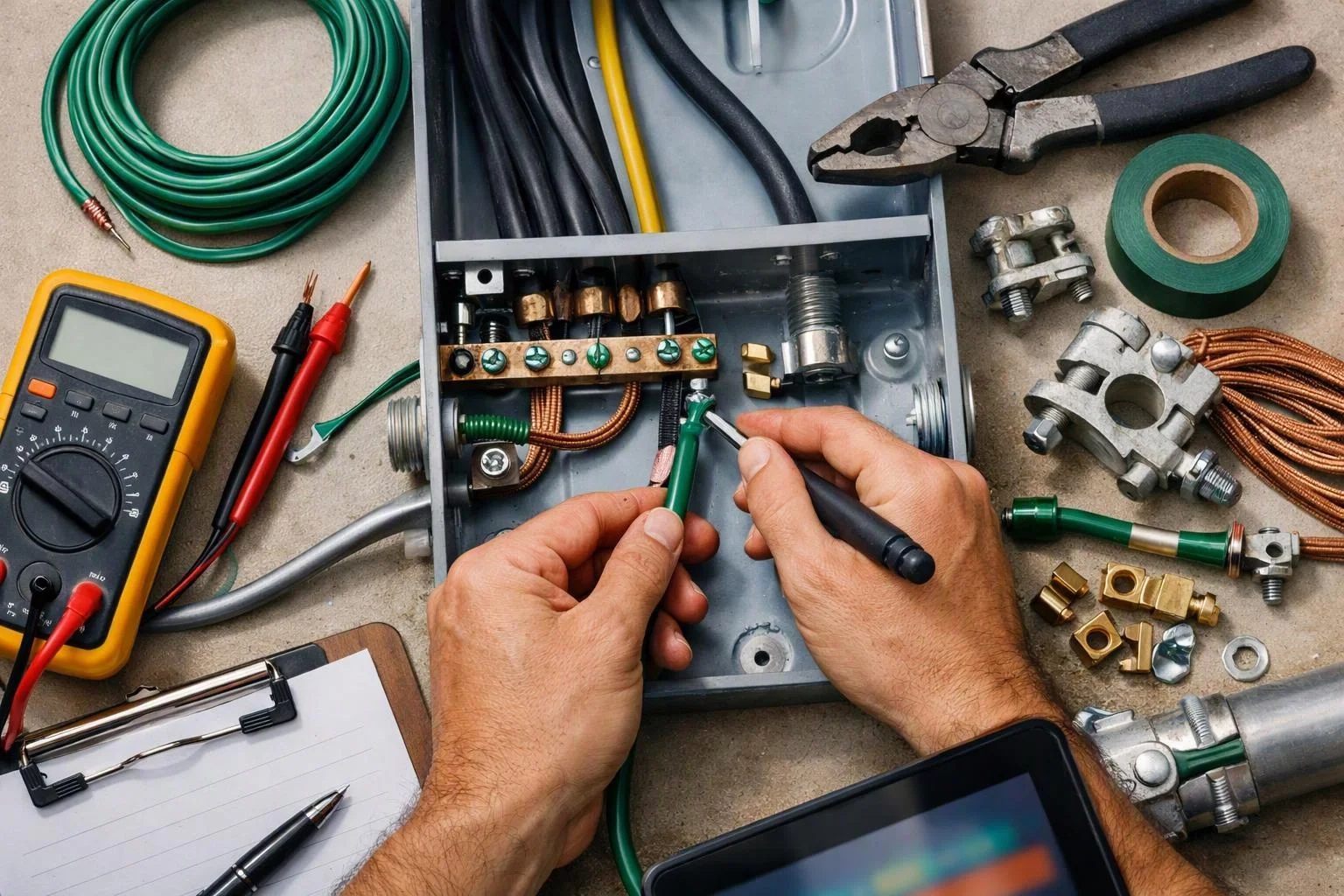
When we perform Electrical Grounding Installation, we inspect the intended bonding points and verify that conductive parts connect continuously. Our team checks connection surfaces, conductors, enclosures, and service equipment for conditions that could interrupt the path. We document practical issues that may require correction before the installation is complete.
Bonding in Practice: A Real-World Example
A home grounding project may include bonding the service equipment enclosure to the grounding system. The connection helps keep the enclosure and related metal parts at a similar electrical potential during a fault.
Related Terms
Ground Fault
A ground fault is an unintended electrical connection between an energized conductor and a grounded surface…
Electrical Service
Electrical Service is the conductors, equipment, and connection that deliver utility power to a building’s electrical…
Service Entrance
A service entrance is the point where utility power enters a building and connects with the…
Center Electric Service
Have Questions About Bonding?
Contact Center Electric Service for practical guidance on Bonding and related 24 hour electrician work in Riverside.