Flickering Lights: Causes, Diagnosis, and Electrical Repair
Flickering lights can result from loose connections, circuit overloads, failing fixtures, or electrical panel faults. Center Electric Service diagnoses the source, checks for safety risks, and completes the appropriate electrical repair.
Get a Free Estimate
What Flickering Lights Can Mean
Flickering lights can indicate a problem with the bulb, fixture, wiring, circuit, or electrical panel. A brief bulb flicker may be simple, but repeated blinking lights can point to an electrical fault.
We trace the symptom through the lighting circuit and check for conditions that may affect electrical safety. Our team connects the visible light problem to the part that needs attention.
Signs Your Flickering Lights Need Electrical Attention
These signs show that a light flicker may involve more than a loose bulb. We use the full set of symptoms to guide safe electrical troubleshooting.
Turn off power to an affected area when there is smoke, heat, sparking, or a burning odor, if you can do so safely. Contact Center Electric Service for the next step when the warning sign continues.
Common Causes of Flickering Lights
Flickering lights often come from a connection or component that is not working steadily. We identify the cause before choosing a repair.
Our crew checks the likely source instead of replacing parts without testing. That approach helps match the finding to safe repair work.
How We Diagnose a Flickering Light Problem
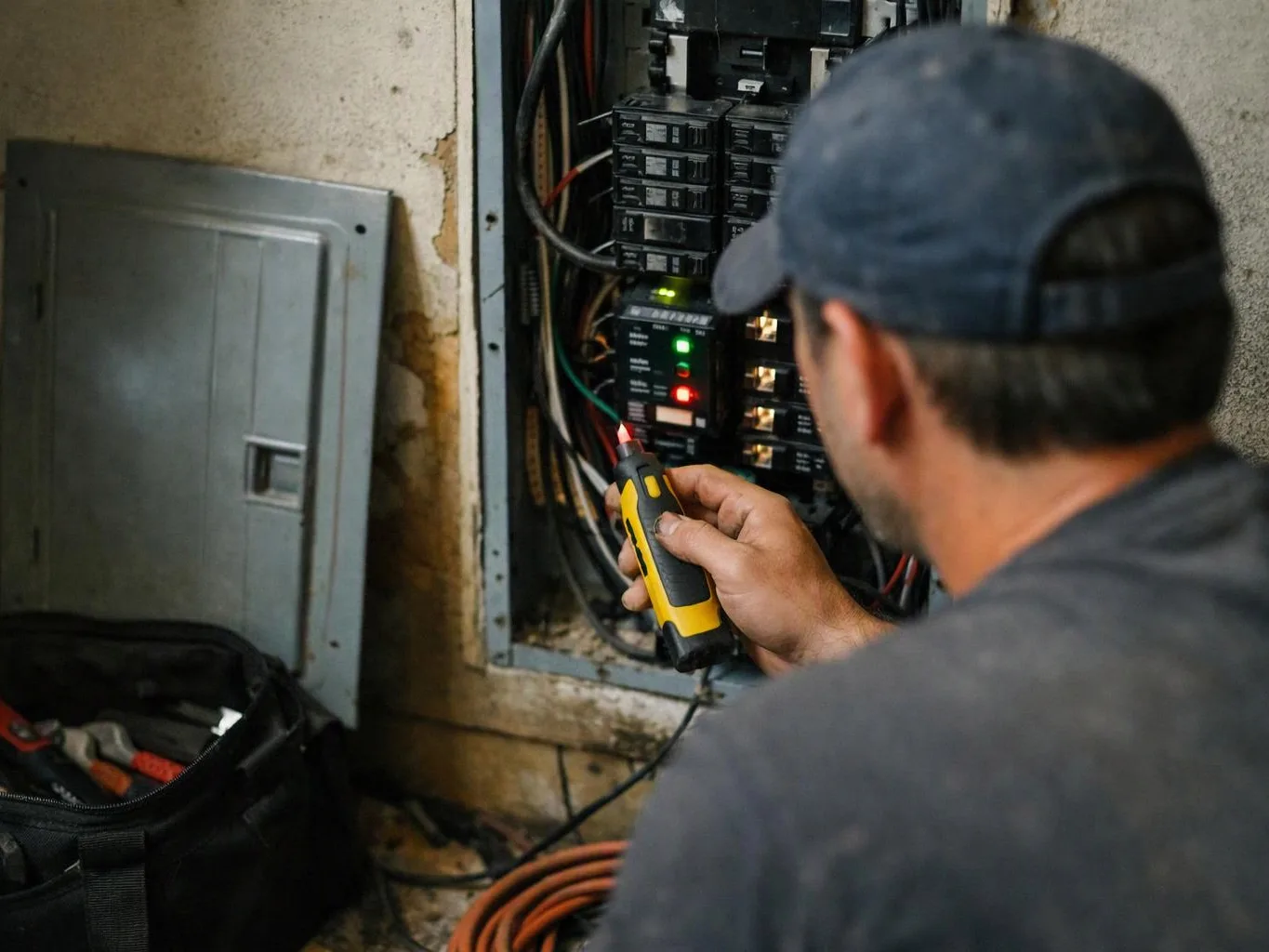
Electrical troubleshooting starts by locating where the unstable power begins. We follow the lighting path from the fixture to the electrical panel.
We explain the finding and the repair scope before work begins. When the issue needs broader review, our Electrical Troubleshooting service connects the symptom to the correct repair.
When Flickering Lights Become a Safety Concern
Flickering lights require prompt electrical attention when they occur with heat, burning odors, buzzing, sparks, smoke, or repeated breaker trips. These signs can point to overheating, arcing, damaged wiring, or an electrical fire risk.
Electric shock is also possible when a damaged connection or fixture is exposed. We can perform an electrical safety inspection to check the affected components and identify unsafe conditions.
Do not open a panel, remove wiring, or work on an energized fixture. Contact Center Electric Service when the problem involves heat, smoke, sparks, or repeated power interruption.
What You Can Check Safely Before Calling for Repair
You can make a few basic observations without opening electrical equipment. Stop checking if you notice heat, smoke, a burning smell, buzzing, or sparks.
Do not remove a switch plate, open a light fixture, or enter the electrical panel. We handle testing and repair when the cause is not clear.
How to Help Prevent Flickering Lights
Good fixture care and safe circuit use can reduce common causes of unstable lighting. We also look for loose connections during an electrical inspection.
Preventive checks can reveal a circuit overload or connection problem before it causes a larger lighting problem. We explain which maintenance or repair choice fits the finding.
Which Electrical Repair Does a Flickering Light Need?
The required repair depends on whether the fault is in the bulb, fixture, switch, wiring, circuit, or electrical panel. We use the diagnosis to select the appropriate repair.
| Finding | Possible repair |
|---|---|
| Faulty light fixture | Light fixture repair or fixture replacement |
| Damaged light switch | Switch repair or replacement |
| Loose or damaged wiring | Wiring repair and connection correction |
| Overloaded branch circuit | Circuit repair or load correction |
| Electrical panel fault | Electrical panel repair after diagnostic testing |
Our team explains the finding before completing electrical repair. We do not treat a panel-related flicker as a fixture problem without checking the circuit and panel.
How We Prepare the Estimate for Flickering Light Repair
The repair estimate depends on the fault location, access required, condition of the electrical components, and the work needed to restore safe operation. We review those factors during electrical diagnosis.
Our estimate explains the repair scope, replacement parts, electrical access, and testing needed for the job. Free Estimates Available applies when we prepare the estimate for your flickering light repair.
We discuss the proposed work before starting. That gives you a clear view of the repair needed for the light fixture, wiring, circuit, or panel.
When to Schedule Electrical Troubleshooting
Schedule electrical troubleshooting when flickering continues, affects multiple fixtures, or appears with other signs of an electrical fault. Repeated symptoms can signal a circuit, wiring, or panel problem.
We can also review the system through an electrical safety inspection when the source is not clear. Our team uses the findings to decide whether the next step is fixture repair, circuit repair, or electrical panel repair.
Contact Center Electric Service to request an evaluation and discuss the repair estimate for your lighting problem.
Questions About Flickering Lights
Can one bad light bulb cause flickering?
Yes, one bad light bulb can cause flickering when the bulb is loose, failing, or not suited to the fixture. Center Electric Service checks the bulb and fixture before tracing the issue into the wiring or circuit.
Why do multiple lights flicker at the same time?
Multiple lights can flicker together when they share a branch circuit, have a voltage fluctuation, or are affected by a panel or wiring fault. We trace the shared circuit and test the related connections.
Should I turn off the circuit when a light is flickering?
Turn off the circuit when the flicker occurs with heat, smoke, sparks, buzzing, or a burning odor, if you can do so safely. Contact us for guidance when you cannot identify the correct circuit or the breaker trips again.
Can a flickering light damage electrical appliances?
A flickering light can point to a voltage problem that may affect other equipment on the same circuit. We test the circuit to identify the source and recommend safe corrective work.
When does flickering indicate an electrical panel problem?
Flickering may indicate an electrical panel problem when several circuits are affected, breakers trip repeatedly, or the panel shows heat, buzzing, or burning odors. We test the panel and connected circuits before recommending electrical panel repair.
Flickering lights deserve attention when the symptom continues or appears with heat, noise, odor, sparks, or breaker trips. Center Electric Service can diagnose the fault and explain the safe repair path.
Get a Free Estimate