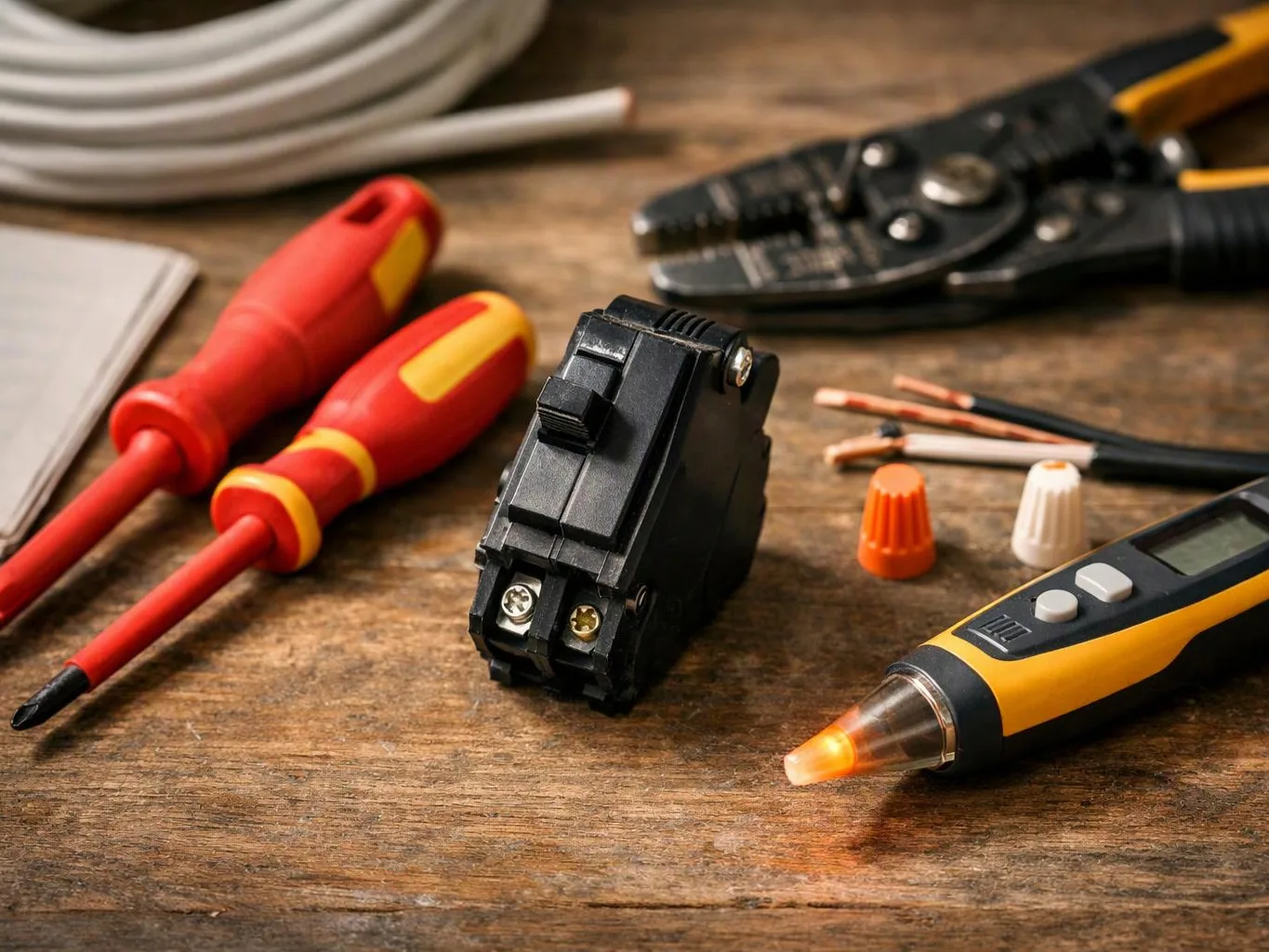
Why Power Can Go Out in Part of a House
A partial power outage can affect some rooms or outlets while others still have power. A circuit is a path that carries power to parts of your home. A fault on that path can cut power to the things it serves.
The trouble may also come from the supply outside your home. We check the affected areas to help find the cause.
Signs of a Partial Power Outage
A partial power outage can show up in lights, outlets, or the breaker panel. Some signs call for urgent help, so check for danger before looking further.
- Lights are dark in part of the house.
- Some outlets aren't working.
- A tripped breaker is visible in the panel.
- Lights flicker or look dim.
- An outlet feels warm, or there's a burning smell.
When a Partial Outage Is an Emergency
A partial outage is an emergency if you see smoke or fire. Leave the house and call emergency services.
Sparks, a burning smell, or a hot outlet or panel are also danger signs. Stay away from the equipment and call us for help. Don't touch damaged or hot electrical parts.
Common Causes of Lost Power
Lost power can start inside your home or at the utility supply. We look for the source before explaining the repair.
- Circuit breaker: A breaker can trip and shut off power to its circuit.
- GFCI outlet: This outlet shuts off power when it detects a fault. It can also shut off power to outlets it protects.
- Electrical wiring: Loose or damaged wiring can break the path of power.
- Utility supply: A problem outside the home can affect part of your power.
Safe Checks Before You Call
Safe checks can help you describe the outage without opening electrical covers. Note which lights and outlets have lost power. Ask your utility if there's a supply problem.
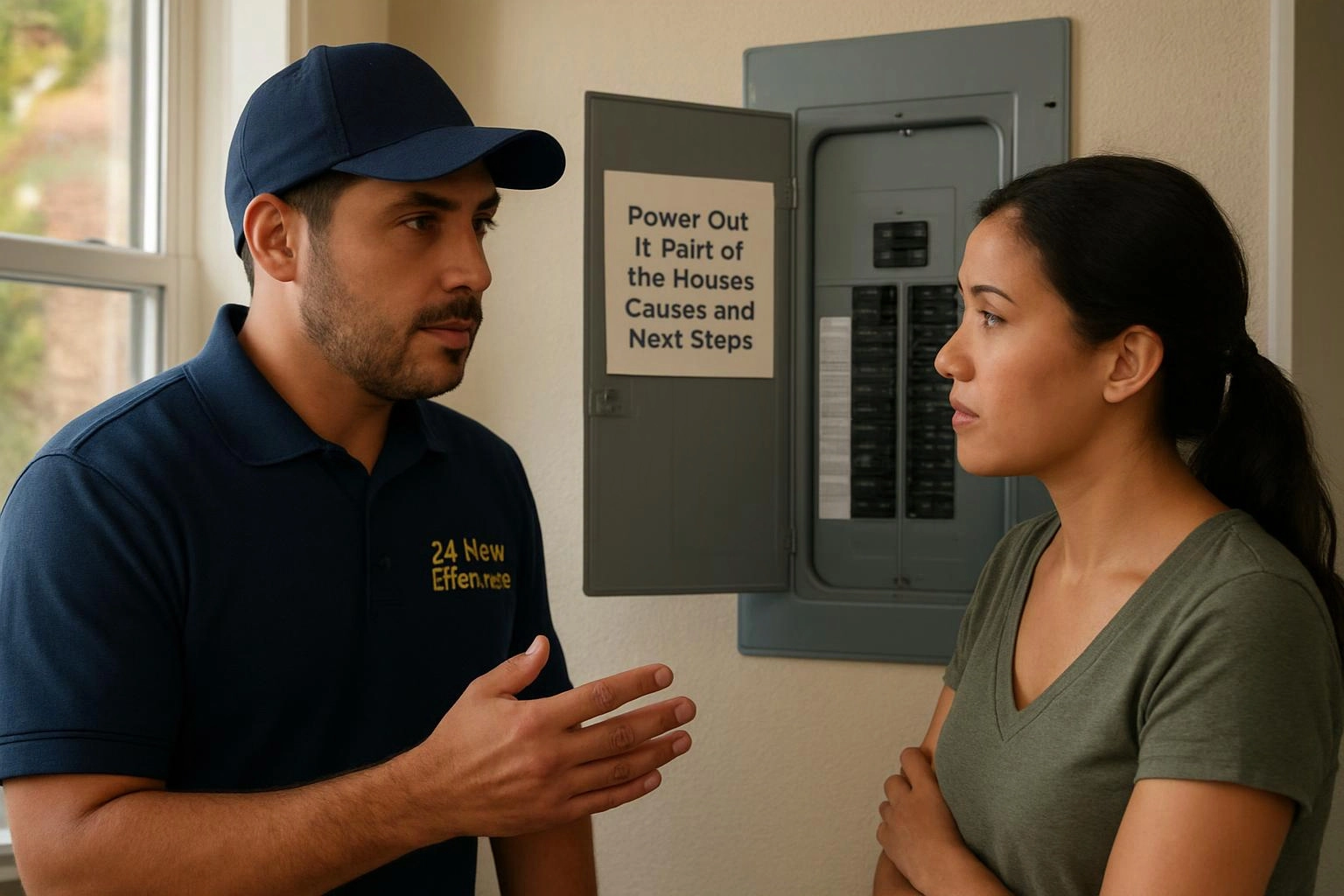
You can look for a tripped breaker or GFCI outlet without opening covers. Don't touch hot, damaged, or wet electrical equipment. Don't keep resetting a breaker that trips again.
A GFCI reset may restore power if the outlet has tripped and there are no danger signs. If the outage returns or the cause isn't clear, call us to check it.
What Does Electrical Troubleshooting Check at Your Home's Breaker Panel?
Electrical troubleshooting checks the breaker panel and affected circuit for the cause of lost power. We look for faults at the panel and along the affected circuit.
We explain whether electrical panel repair or another repair is needed. Our Electrical Troubleshooting service helps find the source before work begins. Free Estimates Available.
Ways to Help Prevent Another Partial Outage
Careful use of outlets and appliances can help prevent another partial outage. Tell us when a problem keeps coming back so we can check its cause.
- Avoid overloading outlets with too many devices.
- Unplug damaged appliances if it's safe to do so.
- Keep electrical equipment away from water.
- Tell us about recurring breaker trips.
When Does Emergency Electrician Service Help With a Burning Outlet in Your Home?
Emergency Electrician service helps when a burning outlet needs urgent electrical attention. A burning smell or visible damage can point to a serious fault. Keep clear of the outlet and don't use it.
If there's smoke or fire, leave the house and call emergency services. We assess the fault and explain the needed repair. Contact Center Electric Service if you need help with a burning outlet.
Get a Free EstimateWhat Are the Key Specifications to Know?
- Topic Focus
- Power Out in Part of the House: Causes and Next Steps
- Related Core Service
- Emergency Electrician
- Evaluation Method
- On-Site Inspection & Written Scope
- Compliance Standard
- Local Building Code & Manufacturer Specs
How Does the Evaluation & Execution Process Compare?
| Evaluation Stage | Technical & Quality Criteria | Timeline Checkpoint |
|---|---|---|
| Initial Diagnostic & Assessment | Identify root cause, site constraints & code requirements | Before any work begins |
| Written Scope & Option Comparison | Compare repair vs. replacement tiers & material grades | Prior to project approval |
| Code-Compliant Execution | Follow manufacturer specs & local permitting standards | During active service |
| Final Verification & Walkthrough | Verify installation alignment, performance & clean site handoff | Upon project completion |
Related Resources
Emergency Electrician vs Regular Electrician: When Can Electrical Repairs Wait?
Compared ToElectrical Panel Repair vs Replacement: Which Do You Need?
Compared ToCircuit Breaker Repair vs Replacement: What Are the Options?
What It CostsEmergency Electrician Cost Factors: After-Hours Calls and Repairs