Which electrical defects commonly require attention?
Loose wiring commonly requires attention because it can create heat and arcing. Other findings include damaged insulation, missing covers, overloaded circuits, and improper grounding. We inspect the related panel, circuit, outlet, or switch. The repair plan depends on the defect, its location, and whether testing finds a wider fault.
What does the crew look at first during a safety inspection?
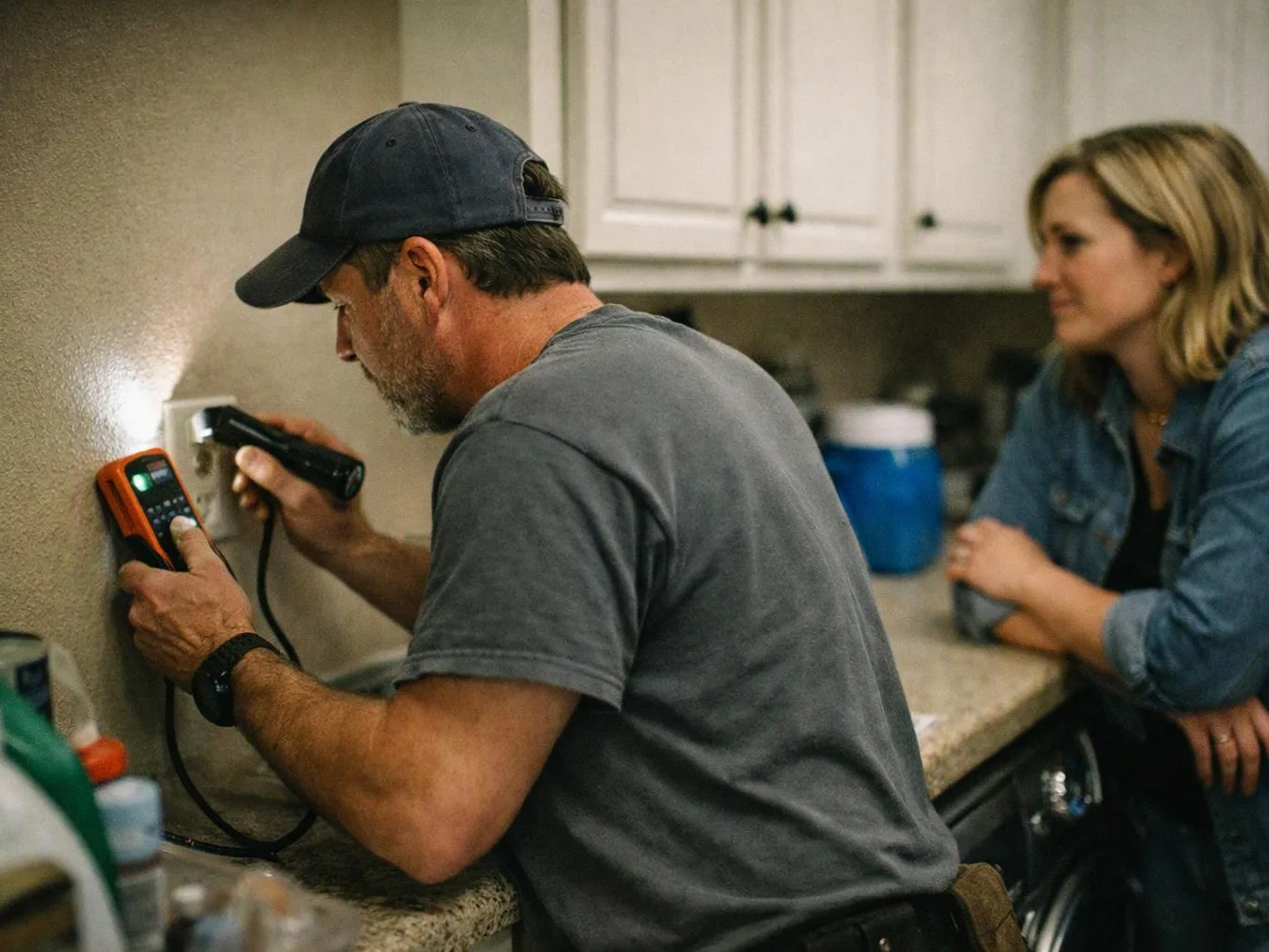
The reported symptom guides the first check. We start at the related panel, breaker, outlet, switch, or visible wire. We look for heat marks, loose terminals, damaged insulation, and missing covers. The first finding helps us trace the circuit and set the rest of the inspection scope.
What should be checked before the inspection is scheduled?
The reported symptom should be recorded before scheduling. Note which outlet, light, breaker, or room is affected, and avoid opening electrical covers. Photos can help show a visible issue, but they don't replace an inspection. Turn off power when safe if you see sparks, smoke, or a burning smell.
Who is a good fit for an electrical safety inspection?
Homeowners, landlords, property managers, and businesses with safety concerns are good fits. The service suits visible defects, repeated breaker trips, wiring questions, and checks before electrical changes. Active sparking, smoke, or power loss needs urgent fault repair first. We then inspect remaining concerns when the area is safe.
How does circuit load affect the inspection quote?
Circuit load affects the quote when we need to trace several loads or review added equipment. We check the breaker, wire size, connected outlets, and signs of heat. A larger repair scope can include a new circuit or panel work. We explain that scope before work proceeds.
Why do missing covers matter on outlets and switches?
Missing covers leave electrical parts exposed to contact, dust, and damage. We check the box, device, wiring, and cover fit. A cover replacement may be a focused repair, but damaged wiring behind it needs a wider check. We explain the finding after inspecting the accessible parts.
What is the difference between an inspection and troubleshooting?
An inspection reviews electrical safety across an agreed area. Troubleshooting follows one active fault, such as a dead outlet or breaker that trips. We use the reported symptom to choose the right service. A safety inspection can reveal repair needs, but it does not replace fault repair.