What Is Line Voltage?
Line voltage is the electrical pressure supplied by a building’s power system to operate equipment, lighting, and receptacles. The term usually describes voltage present on energized circuit conductors. Line voltage differs from low-voltage control power, which operates devices such as thermostats, doorbells, and signaling equipment.
Quick Facts About Line Voltage
Category
Electrical supply characteristic
Used for
Lighting, receptacles, and equipment
Common confusion
Low-voltage control circuits
Also called
Mains Voltage, Supply voltage
Often discussed with
Light Switch Repair
Key Takeaways About Line Voltage
- It is the supply level carried by energized circuit conductors.
- Switches control line voltage that reaches lights and other loads.
- Line voltage is not the same as low-voltage control power.
How Line Voltage Works
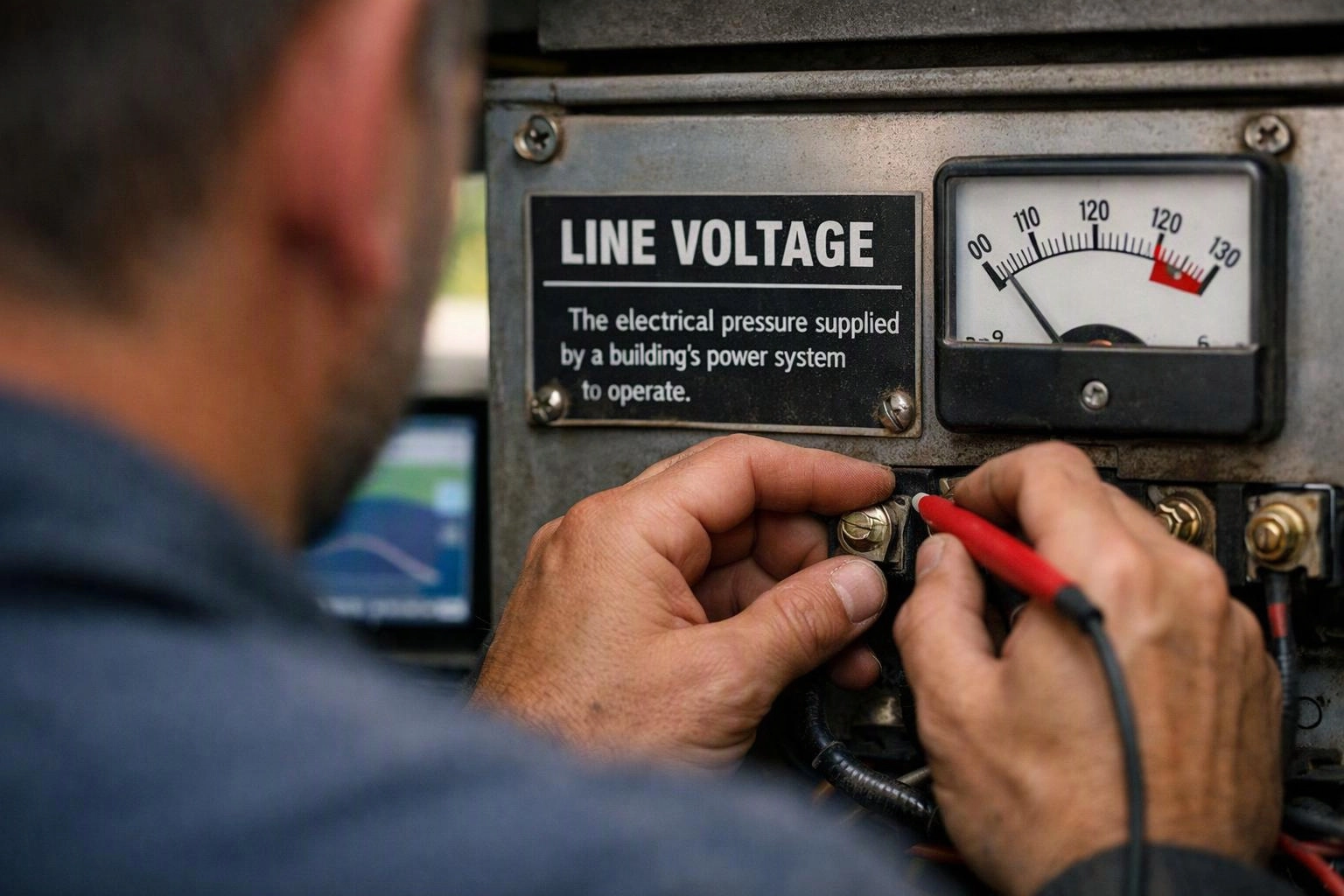
Line voltage travels through circuit conductors from the electrical supply to a connected load. A switch opens or closes the circuit so the load receives power when the circuit is complete. The load may be a light fixture, receptacle, fan, or another electrical device.
Related glossary terms: Electrical Load, Electrical Neutral, Voltage Tester.
An electrician checks line voltage with an appropriate Voltage Tester or meter during electrical troubleshooting. The test helps show whether power reaches the switch, whether the switch passes power when closed, and whether a connection interrupts the circuit. A neutral conductor completes many lighting circuits, while the equipment grounding conductor provides a separate path for fault current.
From the Center Electric Service team
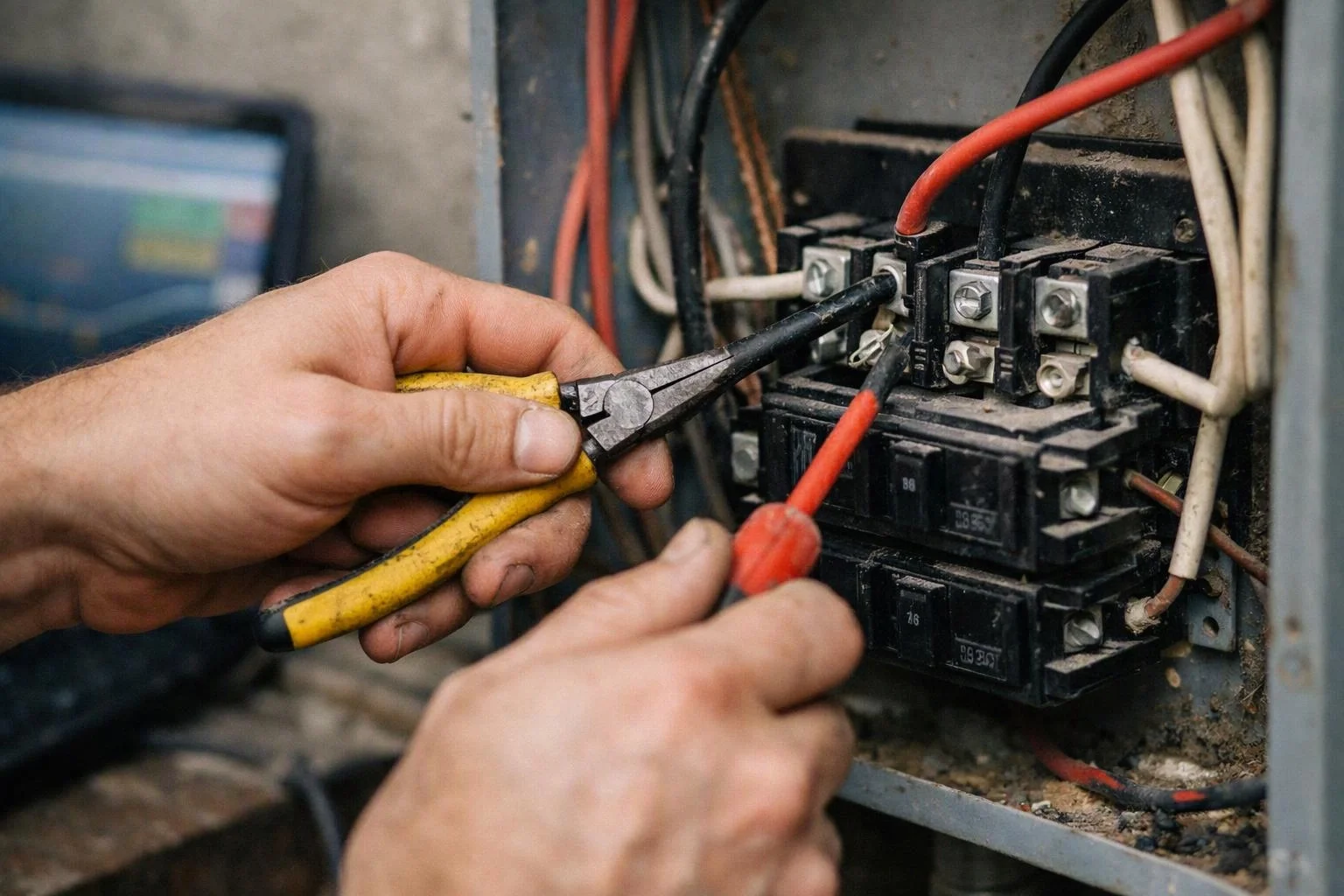
When we work on a light switch, we trace where line voltage enters the switch box and where switched power leaves it. Our team checks the circuit condition and connections before identifying whether the switch, wiring, or connected fixture explains the problem.
Line Voltage in Practice: A Real-World Example
A wall switch may receive line voltage but fail to send switched power to a ceiling light when its internal contacts wear out. Testing the incoming and outgoing conductors helps identify whether the switch or another part of the circuit needs attention.
Related Services
Related Terms
Electrical Load
Electrical load is the amount of power that connected devices and equipment draw from an electrical…
Electrical Neutral
Electrical Neutral is the current-carrying path that returns electricity from a load to the electrical source…
Voltage Tester
A voltage tester is a handheld electrical testing tool that checks whether electrical potential is present…
Voltage Drop
Voltage Drop is the reduction in electrical pressure that occurs as current travels through a conductor…
Center Electric Service
Have Questions About Line Voltage?
Contact Center Electric Service for practical guidance on Line Voltage and related 24 hour electrician work in Riverside.