Emergency Electrician or Electrical Troubleshooting: Which Do You Need?
Emergency electrician or electrical troubleshooting depends on the risk and the fault: Center Electric Service handles urgent electrical hazards first, then traces and repairs the underlying problem when needed.
Get a Free Estimate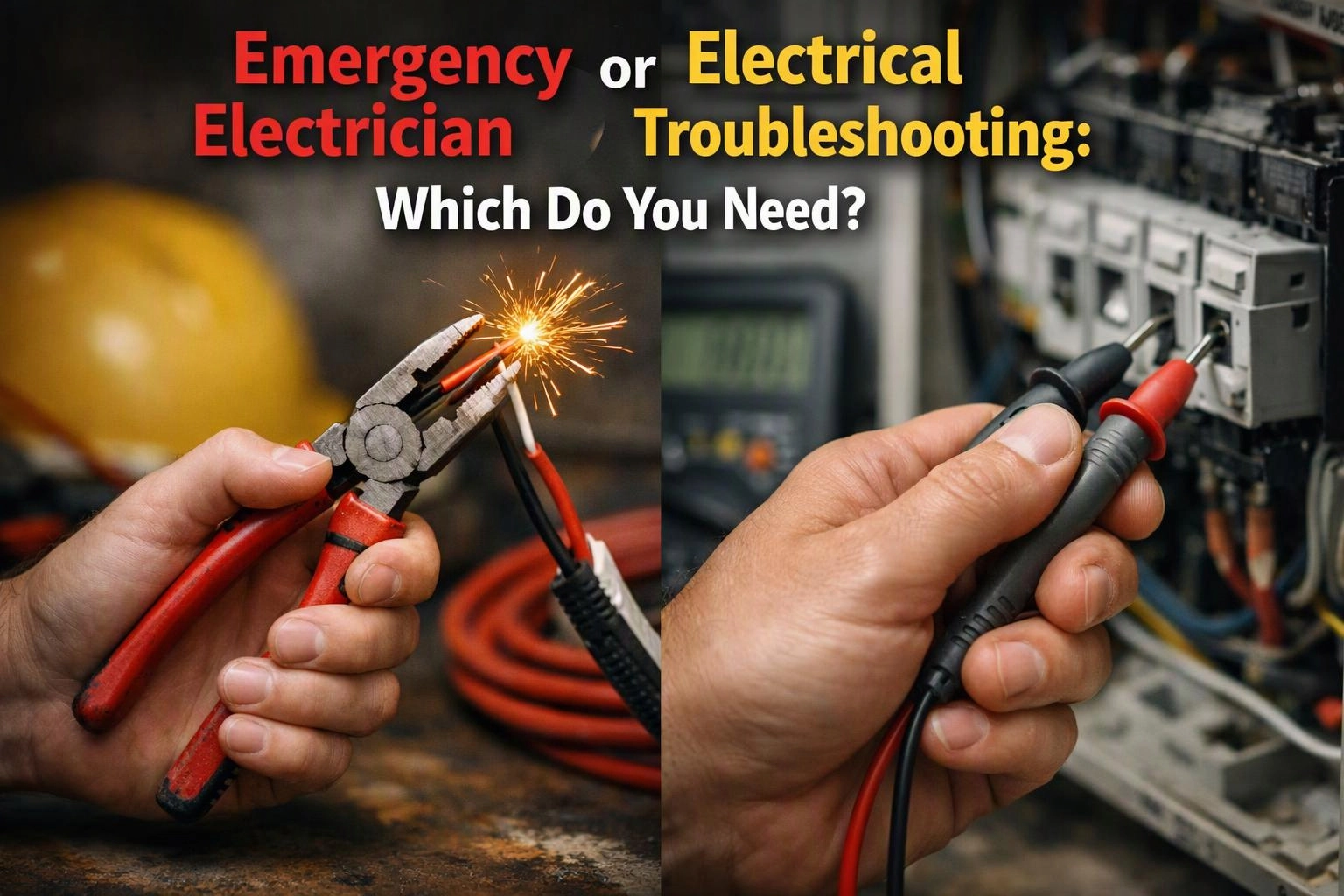
What Is the Difference Between an Emergency Electrician and Electrical Troubleshooting?
Emergency electrician service addresses an immediate electrical safety risk, while electrical troubleshooting identifies the cause of an electrical problem that may be intermittent, hidden, or non-obvious.
An electrical emergency can include smoke, exposed wiring, a shock risk, or an outlet that sparks. We focus first on safe power isolation so the electrical hazard does not continue to affect people or property.
Electrical troubleshooting is a planned fault-finding process. Our team checks the circuit, outlet, switch, wiring, and electrical panel to locate the electrical fault and plan the right electrical repair.
When Do You Need Both Services Together?
Both services work together when an urgent electrical problem also needs a full fault diagnosis. We control the immediate risk first, then trace the cause so the same problem does not continue.
Common situations that may need both services include:
Repeated circuit breaker trips also need care. We inspect the circuit and complete electrical fault diagnosis before deciding whether the issue involves the load, wiring, panel, or a connected device.
How Does Center Electric Service Decide Which Electrical Work Comes First?
Center Electric Service prioritizes immediate electrical hazards, makes the area safe, and then checks the electrical system to identify the fault and required repair.
Our team begins with an electrical safety assessment based on visible damage, power loss, burning odor, sparks, and other warning signs. We use safe power isolation when needed before examining the affected circuit.
We then complete a circuit inspection that may include the electrical panel, circuit breaker, outlets, switches, and electrical wiring. This process helps separate the visible symptom from the root cause.
Inspection and repair decisions also consider code and inspection criteria that apply to the work. We explain the repair scope before completing the electrical repair.
How Do Emergency Electrical Work and Troubleshooting Work Together?
Emergency electrical work and troubleshooting work together as a sequence that protects the property before deeper testing begins. Each step gives the next step useful information about the fault.
The cost can change when the fault is difficult to access, the circuit is complex, or replacement parts are needed. Combining the work can address the urgent symptom and the underlying cause during the same service process.
What Changes the Cost of This Electrical Job?
The cost depends on the electrical fault, the accessibility of the affected components, the repair scope, and any parts required; Center Electric Service provides Free Estimates Available after assessing the work.
Fault location can affect the work when the problem is inside an outlet, electrical panel, ceiling space, wall, or other difficult area. Circuit complexity can also add testing because several parts may share the same electrical wiring.
Replacement parts may include an outlet, switch, circuit breaker, wiring, or another electrical component. We explain what we found, what the repair includes, and which parts are needed before work begins.
What Should You Do Before Center Electric Service Arrives?
Electrical safety comes first before our crew arrives, especially when smoke, sparking, or water is near electricity. Avoid touching damaged equipment or attempting electrical repairs yourself.
Share clear details about what you saw and when the problem began. We use that information to prepare for the right emergency response or troubleshooting process.
How Can You Request the Right Electrical Service?
Describe the electrical symptom, any immediate hazard, and what changed before the problem began so Center Electric Service can determine whether the visit requires emergency response, troubleshooting, or both.
Useful details include whether the issue affects one outlet, one circuit, or the whole property. Tell us about a power outage, burning smell, sparking outlet, tripped breaker, flickering lights, or intermittent power.
Our team uses those details to plan the electrical inspection and explain the next step. Contact us through Center Electric Service to request the right electrical service.
Questions About Emergency Electrical Troubleshooting
Can an electrical problem be urgent without a complete power outage?
Yes, an electrical problem can be urgent without a complete power outage when it includes smoke, sparks, burning odor, overheating, exposed wiring, or shock risk. We assess the hazard and make the area safe before tracing the fault.
Should I reset a circuit breaker that keeps tripping?
No, you should not keep resetting a circuit breaker that trips repeatedly. We inspect the circuit to find whether the cause is an overload, wiring fault, loose connection, or another electrical problem.
What information should I give Center Electric Service about an electrical emergency?
Tell Center Electric Service what happened, which area is affected, whether the problem includes smoke or sparks, and whether the power changed before the issue began. This information helps us prepare for safe power isolation and fault diagnosis.
Can electrical troubleshooting identify an intermittent power problem?
Yes, electrical troubleshooting can identify an intermittent power problem by reviewing the affected circuit, connections, devices, and electrical panel. We use the reported pattern and inspection findings to locate the fault.
Related Resources
Faulty Wiring and Electrical Fire Warning Signs
Compared ToStandard vs Premium Emergency Electrician Systems & Materials Compared (2026)
Compared ToLocal Specialist vs National Emergency Electrician Providers in Riverside: Cost & Service Compared
What It CostsEmergency Electrician Cost Factors and Quote Preparation