
What Is a Capacitor?
A capacitor is an electrical component that stores and releases energy in a circuit. In ceiling fans, the capacitor helps create the phase shift needed for the motor to start and run. Its capacitance and voltage rating must suit the motor and circuit. A failing capacitor can cause weak airflow, humming, or startup problems.
Quick Facts About Capacitor
Category
Motor circuit component
Used for
Starting and controlling motor operation
Common confusion
A capacitor is not a battery
Also called
Motor capacitor, Fan capacitor
Often discussed with
Ceiling Fan Repair
Key Takeaways About Capacitor
- A capacitor stores electrical energy for controlled release.
- Ceiling fans rely on capacitors for motor starting and speed control.
- A capacitor is not the same component as a battery.
How Capacitor Works
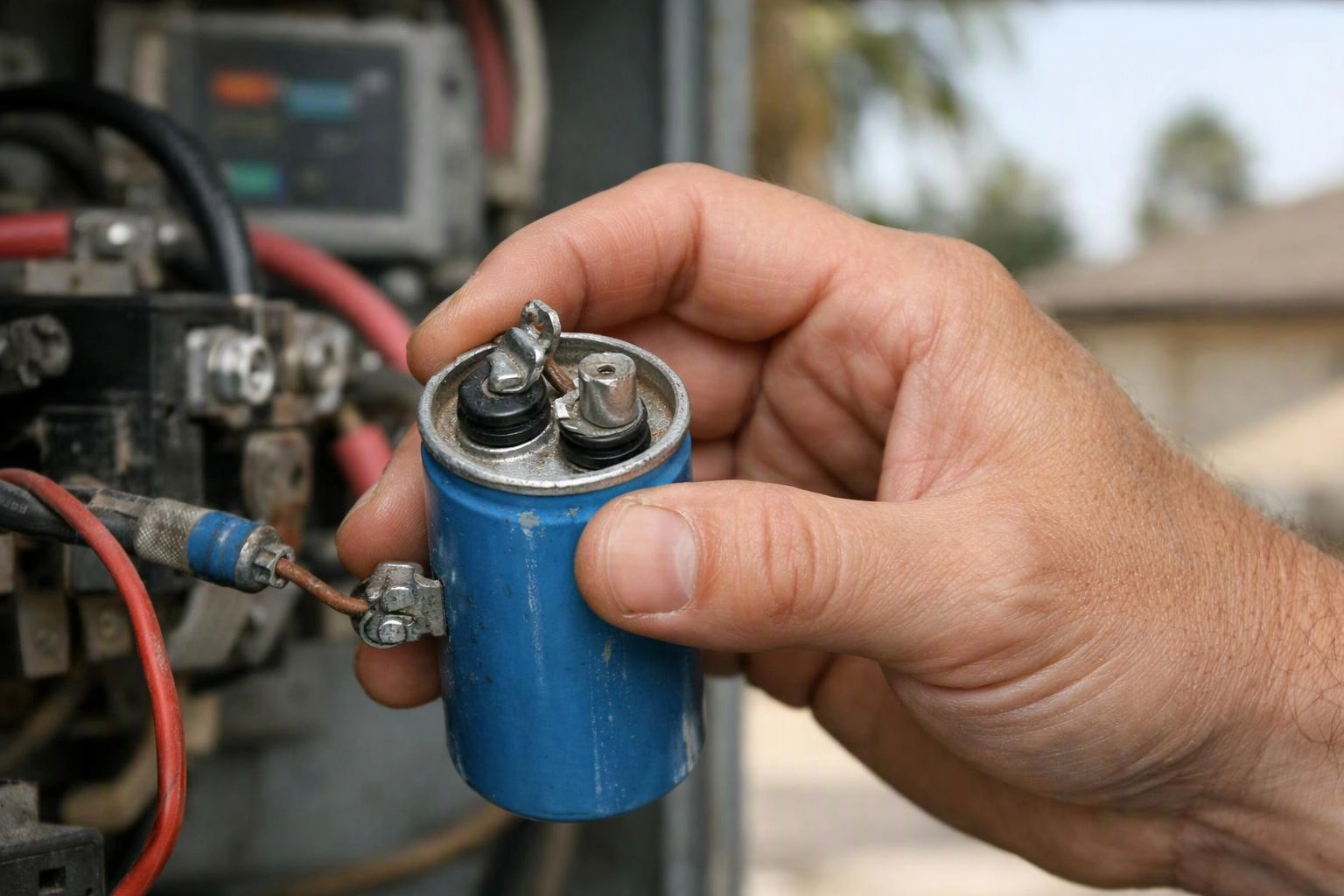
A capacitor stores charge on conductive surfaces separated by an insulating material. When connected to a motor circuit, the capacitor releases that stored energy in a controlled pattern. This timing creates a phase shift between electrical currents, which gives the motor the conditions needed to start and keep turning.
Related glossary terms: Electrical Load, Line Voltage, Voltage Drop.
Ceiling fans may use separate capacitor sections for different speed settings. A switch selects the part of the capacitor that changes motor performance. Capacitance is measured in farads, while the component also carries a voltage rating. The correct replacement must match the motor design and the original electrical specifications.
A weak capacitor may leave a fan humming, turning slowly, or needing help to start. A shorted or open capacitor can prevent normal motor operation. Technicians compare the fan symptoms with electrical test results before choosing a replacement.
From the Center Electric Service team
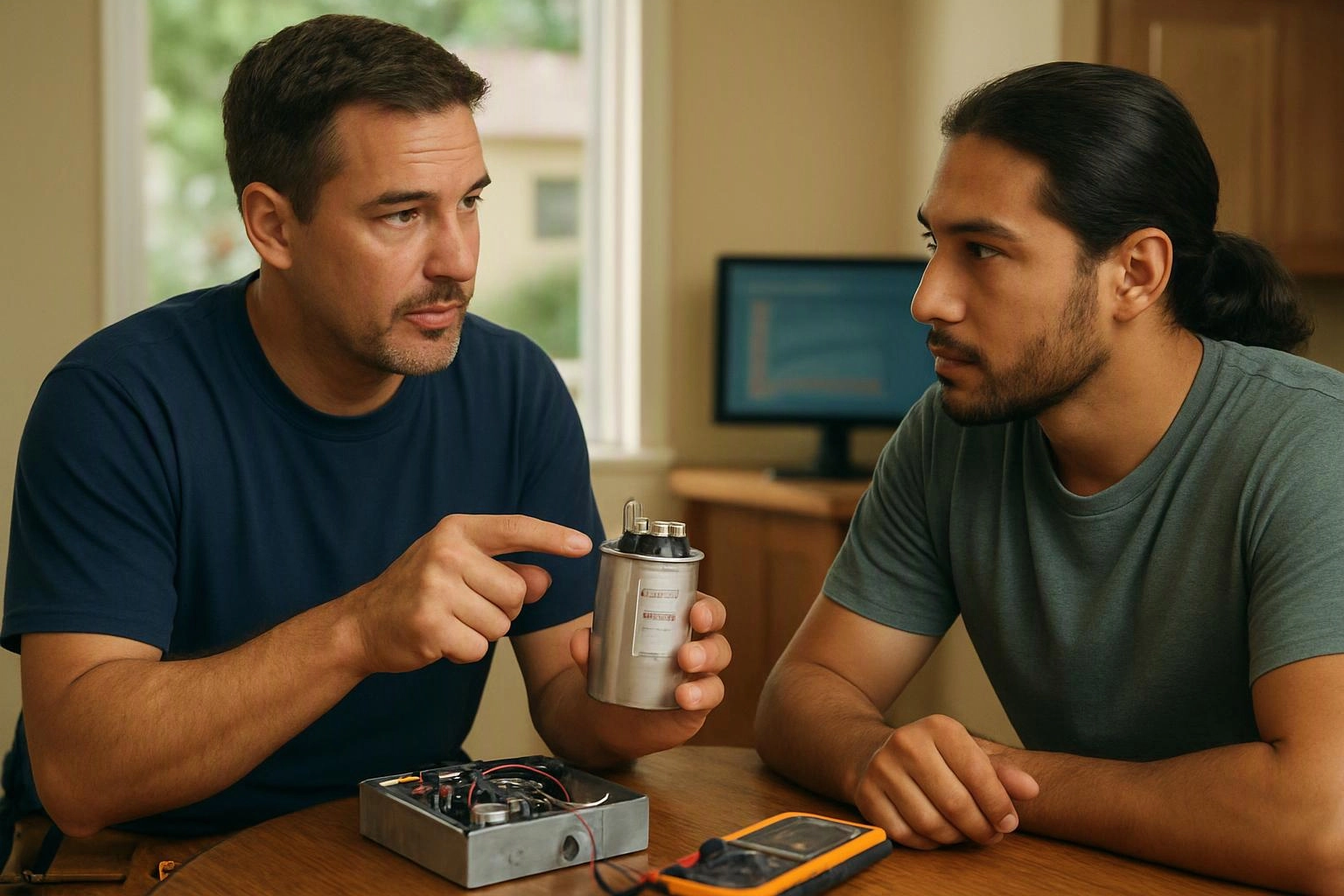
When we inspect a ceiling fan, we check the capacitor alongside the motor, wiring, and speed controls. We compare the component markings with test results and the fan’s symptoms. That process helps separate a capacitor problem from a switch, connection, or motor fault.
Capacitor in Practice: A Real-World Example
A ceiling fan hums and moves slowly even though its switch works. Testing may show that the capacitor no longer provides the electrical timing the motor needs, so the correct replacement restores normal operation.
Related Services
Related Terms
Electrical Load
Electrical load is the amount of power that connected devices and equipment draw from an electrical…
Line Voltage
Line voltage is the electrical pressure supplied by a building’s power system to operate equipment, lighting…
Voltage Drop
Voltage Drop is the reduction in electrical pressure that occurs as current travels through a conductor…
Voltage Tester
A voltage tester is a handheld electrical testing tool that checks whether electrical potential is present…
Center Electric Service
Have Questions About Capacitor?
Contact Center Electric Service for practical guidance on Capacitor and related 24 hour electrician work in Riverside.