
What Is Overcurrent?
An overcurrent is an electrical flow that exceeds the safe capacity of a circuit, wiring system, or device. It can result from excessive connected load, a short circuit, or another fault. Protective devices such as circuit breakers detect the condition and interrupt power to limit heating and equipment damage.
Quick Facts About Overcurrent
Category
Electrical protection condition
Used for
Circuit and breaker diagnosis
Common confusion
Overcurrent is not overvoltage
Also called
Excess Current, Overload current
Often discussed with
Circuit Breaker Replacement, Circuit Breaker Repair
Key Takeaways About Overcurrent
- Overcurrent concerns excessive electrical flow, not excessive voltage.
- A breaker may interrupt power when current exceeds circuit capacity.
- Overcurrent is not the same as a ground fault.
How Overcurrent Works
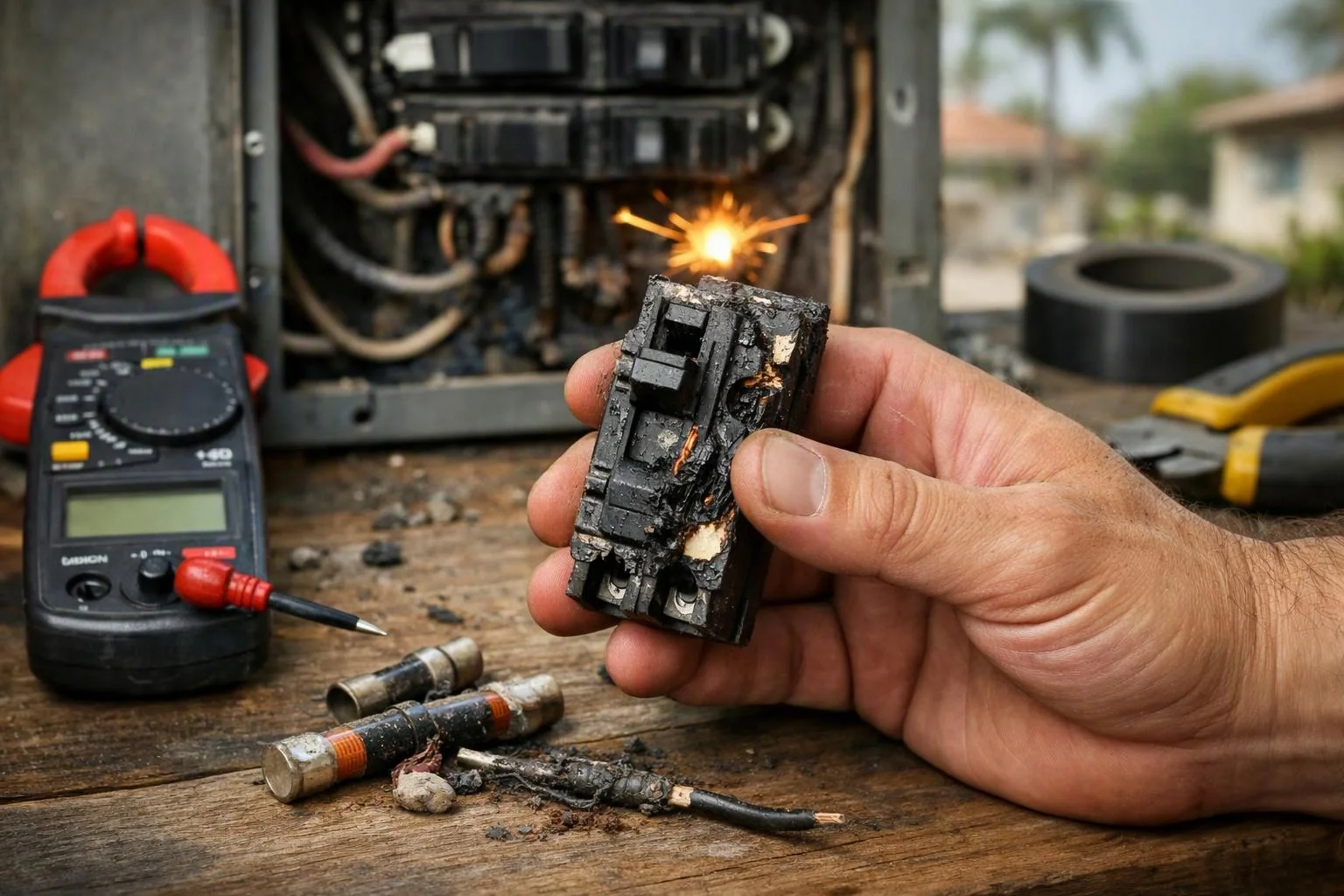
Overcurrent develops when a circuit carries more electrical flow than its wiring or connected equipment can handle safely. A circuit breaker responds to that excess by opening the circuit and stopping power. The condition may come from too many operating loads, a short circuit, or a damaged component.
Related glossary terms: Electrical Load, Short Circuit, Main Breaker.
During circuit breaker replacement, the overcurrent cause matters as much as the breaker itself. A replacement breaker must match the circuit design and wiring capacity. Replacing a tripping breaker without checking the connected load can leave the underlying fault unresolved. A breaker that trips during normal use may point to an overloaded circuit, while an immediate trip may suggest a short circuit or another fault.
From the Center Electric Service team
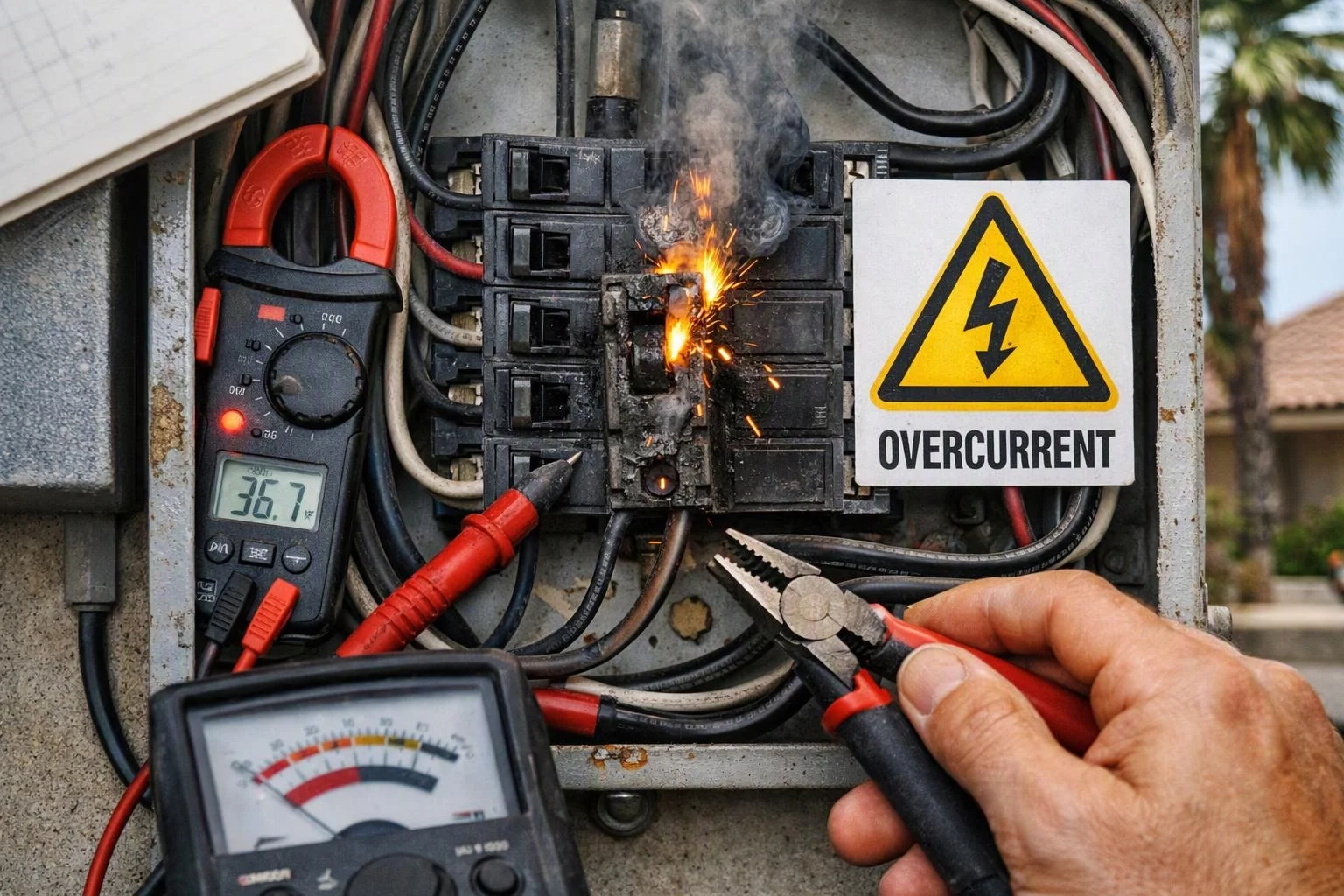
When we investigate an overcurrent condition, we inspect the breaker, connected loads, and accessible wiring before selecting a replacement. Our team looks for signs that the breaker operated because of an ongoing fault, not simply because the device became worn. That distinction helps keep the repair focused on the actual circuit problem.
Overcurrent in Practice: A Real-World Example
A homeowner adds several high-demand appliances to one kitchen circuit, and the breaker begins tripping during use. For a circuit breaker replacement, the electrical load and wiring condition must be checked before selecting a new breaker.
Related Terms
Electrical Load
Electrical load is the amount of power that connected devices and equipment draw from an electrical…
Short Circuit
A short circuit is an unintended low-resistance path between electrical points that should remain separate. The…
Main Breaker
A Main Breaker is the primary overcurrent protection device in an electrical panel. The device controls…
Wire Gauge
Wire Gauge is a standardized system for describing a conductor’s thickness and current-carrying capacity. The gauge…
Center Electric Service
Have Questions About Overcurrent?
Contact Center Electric Service for practical guidance on Overcurrent and related 24 hour electrician work in Riverside.