AFCI vs GFCI Protection: What Is the Difference and Where Is Each Used?
AFCI and GFCI protection compares two different electrical safety devices: AFCI protection detects hazardous arcing that can start fires, while GFCI protection interrupts power during ground faults that can cause shock. Center Electric Service checks the circuit, device placement, and panel compatibility when we inspect or replace protection.
Get a Free EstimateQuick Picks
AFCI and GFCI protection address different hazards. The right choice depends on the circuit location, wiring, electrical panel, and safety concern.
What Is the Difference Between AFCI and GFCI Protection?
AFCI protection responds to dangerous electrical arcing, while GFCI protection responds to current flowing along an unintended path to ground.
An arc fault can happen when damaged insulation, a loose connection, or a damaged electrical cord creates an unsafe electrical path. The resulting heat can lead to an electrical fire. An arc-fault circuit interrupter detects patterns linked to hazardous arcing and interrupts the circuit.
A ground fault happens when current leaves its intended path and reaches ground through another route. That route may include a person, creating an electrical shock hazard. A ground-fault circuit interrupter detects the current imbalance and interrupts power quickly.
We inspect the branch circuit and protection device together because the device must match the circuit design and the hazard it is meant to address.
AFCI vs GFCI: Quick Comparison
AFCI and GFCI protection solve different safety problems, so the correct choice depends on the hazard and circuit location. Device type, panel compatibility, wiring condition, and access all affect the work required.
| Factor | AFCI | GFCI |
|---|---|---|
| Primary hazard | Electrical arcing that can ignite surrounding materials | Ground-fault current that can create a shock hazard |
| How it responds | Detects patterns associated with hazardous arcs and interrupts the circuit | Detects an imbalance between outgoing and returning current and interrupts the circuit |
| Common form | AFCI circuit breaker or AFCI receptacle | GFCI receptacle or GFCI circuit breaker |
| Cost | Depends on the panel, circuit configuration, device type, and installation work | Depends on the receptacle or breaker type, wiring condition, circuit configuration, and installation work |
| Installation timeline | Depends on panel access, wiring condition, and whether circuit changes are needed | Depends on device access, wiring condition, and whether protection must cover additional outlets |
| Maintenance | Requires periodic testing and investigation of nuisance trips or fault indications | Requires periodic testing and investigation of failed tests, nuisance trips, or reset problems |
| Best for | Reducing fire risk from arcing on protected circuits | Reducing shock risk where electricity may contact people and grounded surfaces |
We use the comparison as a starting point, not as a substitute for checking the actual electrical panel and circuit wiring.
Where Is AFCI Protection Used?
AFCI protection is used on circuits where damaged, loose, or improperly connected wiring could create an arcing fire hazard.
An AFCI breaker may protect a branch circuit serving living areas and other spaces identified by applicable electrical requirements. The correct device depends on the electrical panel, circuit wiring, and required branch-circuit protection.
We inspect the panel and accessible electrical wiring before recommending AFCI replacement or circuit changes.
How AFCI Protection Helps Prevent Electrical Fires
AFCI protection detects patterns linked to series arcs and parallel arcs before the heat from hazardous arcing can grow into a fire hazard.
Damaged insulation and a loose connection can allow arcing or overheating. We look for visible damage, heat marks, loose terminations, and other signs that may affect safe circuit operation.
When an AFCI Breaker May Need Attention
An AFCI breaker may need attention when repeated tripping, an AFCI indicator, a burning odor, scorch marks, or damaged wiring appears.
What Are the Advantages of AFCI Protection?
AFCI protection adds circuit interruption for hazardous arcing that ordinary overcurrent protection may not detect.
Best for: AFCI protection is best for circuits where the main concern is fire caused by electrical arcing.
Where Is GFCI Protection Used?
GFCI protection is used where contact between electricity, people, and grounded surfaces could create a shock hazard.
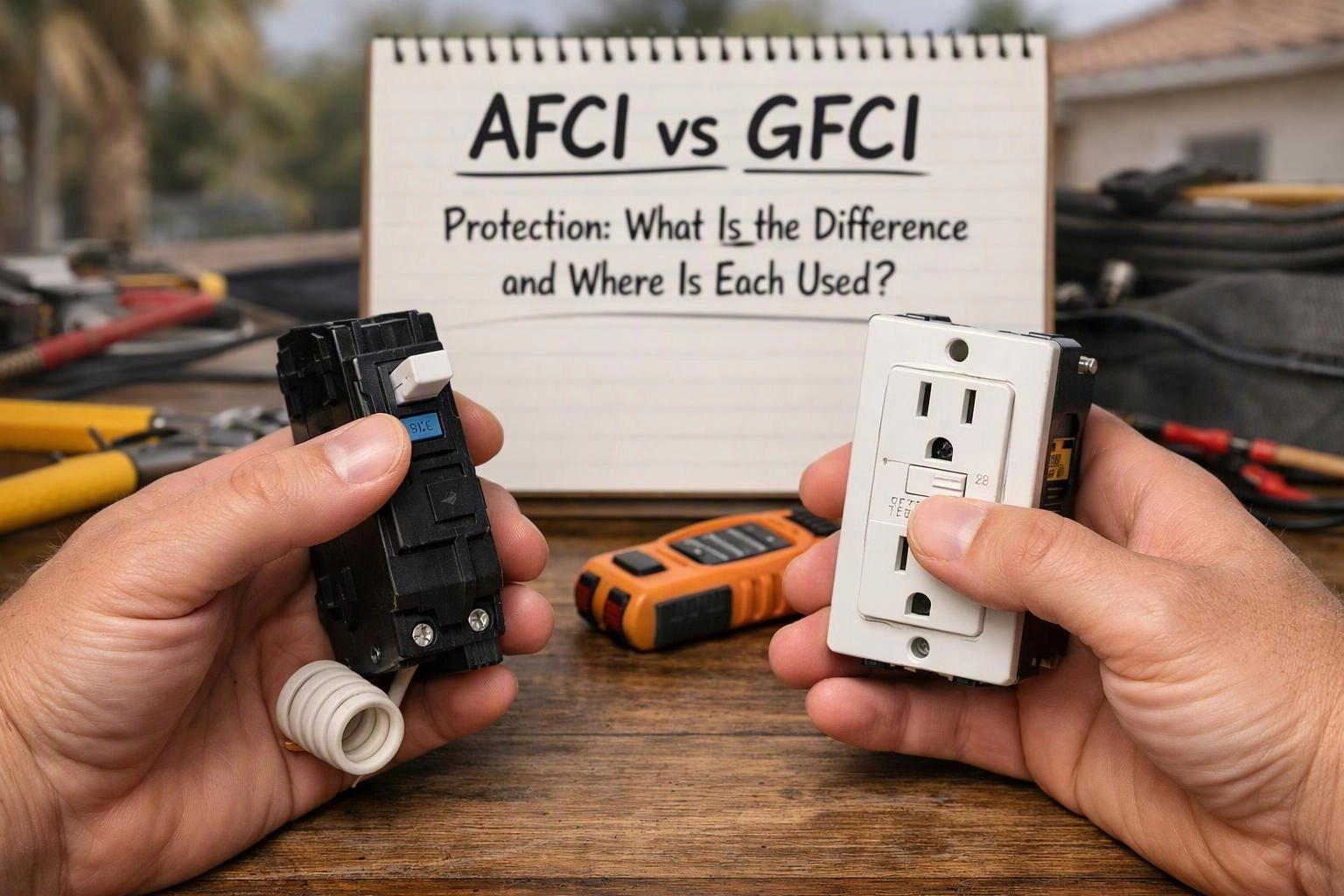
A GFCI receptacle may protect its own outlet and downstream outlets when wired and placed correctly. A GFCI breaker can protect a circuit from the electrical panel. The choice depends on the circuit design, device location, and required coverage.
We check moisture exposure, grounding, wiring condition, and device placement before recommending GFCI replacement.
How GFCI Protection Responds to Ground Faults
A GFCI detects a current imbalance between the power leaving the circuit and the power returning through the intended conductors.
When current uses an unintended grounding path, the trip mechanism interrupts power to reduce the risk of electrical shock. We test the device and inspect the related circuit when the protection does not operate as expected.
When a GFCI Receptacle May Need Attention
A GFCI receptacle may need attention when it has a failed test, a reset button that will not operate, nuisance tripping, moisture exposure, or loose wiring.
What Are the Advantages of GFCI Protection?
GFCI protection quickly interrupts a circuit when current leaves its intended path and creates a shock hazard.
Best for: GFCI protection is best for locations where moisture or grounded surfaces increase the risk of electrical shock.
Can a Circuit Have Both AFCI and GFCI Protection?
Yes, a circuit can have both AFCI protection and GFCI protection when the circuit design and compatible devices support both functions.
A dual-function circuit breaker can combine both protective functions at the electrical panel. Other circuit designs may use separate compatible devices. We confirm device compatibility, neutral conductor arrangements, circuit wiring, and load conditions before making a change.
How We Check Compatibility Before Replacing a Breaker
Which Protection Does Your Circuit Need?
The required protection depends on the circuit's hazard, location, wiring, panel compatibility, and applicable electrical requirements.
AFCI selection focuses on arc-fault fire risk. GFCI selection focuses on ground-fault shock risk. Dual-function protection may address both when the electrical panel and branch circuit support it.
Our Electrical Safety Inspection helps us review the protection already installed and identify needed repairs.
What We Check During an Electrical Safety Inspection
What Changes the Cost of AFCI or GFCI Work?
The cost of AFCI or GFCI work changes with the protection device, panel compatibility, circuit access, wiring condition, and any required repairs.
AFCI replacement may involve an AFCI circuit breaker, circuit wiring, or panel compatibility. GFCI replacement may involve a receptacle, breaker, downstream outlets, moisture damage, or wiring corrections.
Our Circuit Breaker Replacement process starts with checking the existing device and circuit before we select compatible protection.
What Our Estimate Covers
Center Electric Service provides Free Estimates Available after we assess the circuit, panel, device, and related wiring conditions.
Our estimate explains the inspection findings, device selection, circuit testing, replacement work, and wiring corrections that may be needed. We provide the exact quote after reviewing the job conditions.
Questions About AFCI and GFCI Protection
Does AFCI protect against electrical shock?
No. AFCI protection is designed to respond to hazardous arcing and reduce fire risk. GFCI protection addresses ground-fault shock hazards.
Does GFCI protect against electrical fires?
GFCI protection is designed to reduce shock risk from ground faults. AFCI protection addresses hazardous arcing that can create an electrical fire.
Can an AFCI breaker and GFCI receptacle be used on the same circuit?
Yes, an AFCI breaker and GFCI receptacle can be used on the same circuit when the devices, neutral conductor, wiring, and panel configuration are compatible. We check the circuit before approving that arrangement.
Why does an AFCI or GFCI keep tripping?
An AFCI or GFCI may keep tripping because of damaged wiring, a loose connection, a faulty load, moisture, a wiring error, or a problem with the protective device. We test the circuit and identify the cause before replacing the device.
Can a GFCI receptacle replace a GFCI breaker?
A GFCI receptacle can replace a GFCI breaker only when the circuit design, required coverage, wiring, and device location support that change. We inspect the circuit before selecting the protection method.
What should I do if an AFCI or GFCI will not reset?
If an AFCI or GFCI will not reset, stop using the affected circuit and contact Center Electric Service. We inspect for a ground fault, arc fault, wiring issue, moisture, overload, or failed protective device.
Contact Center Electric Service when you need help choosing, testing, or replacing AFCI and GFCI protection. We inspect the electrical panel, branch circuit, wiring, and device compatibility before completing the work.